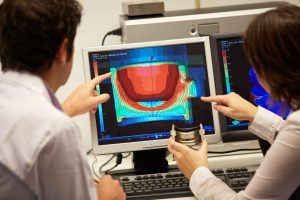
Interpretar esquemas hidráulicos y neumáticos: la competencia técnica que marca la diferencia

Los motores fueraborda son el corazón de miles de embarcaciones de recreo, pesca y trabajo. Sin embargo, una gran parte de las averías que sufren no se deben a fallos complejos, sino a mantenimientos incorrectos o diagnósticos mal realizados.
Conocer en profundidad cómo funcionan estos motores, cómo deben mantenerse y cómo identificar el origen de una avería es una competencia cada vez más demandada en el sector náutico.

Read more

What is Code_Aster and how to learn finite element simulation with open-source software

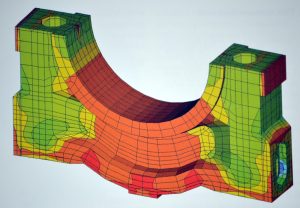
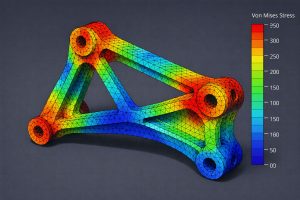
Code_Aster es un software de simulación numérica basado en el método de los elementos finitos. Permite resolver problemas complejos de ingeniería mediante modelos matemáticos que representan el comportamiento físico de estructuras o sistemas. Esto lo convierte en una herramienta extremadamente versátil en el ámbito del Computer Aided Engineering (CAE). A diferencia de otros softwares comerciales, Code_Aster se distribuye bajo licencia GNU GPL, lo que significa que puede utilizarse libremente.
Read more

How to diagnose faults in outboard engines: maintenance and operation for marine mechanics

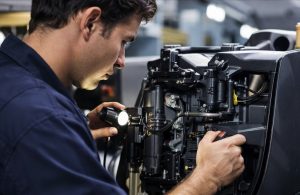
Los motores fueraborda son el corazón de miles de embarcaciones de recreo, pesca y trabajo. Sin embargo, una gran parte de las averías que sufren no se deben a fallos complejos, sino a mantenimientos incorrectos o diagnósticos mal realizados.
Conocer en profundidad cómo funcionan estos motores, cómo deben mantenerse y cómo identificar el origen de una avería es una competencia cada vez más demandada en el sector náutico.

Read more

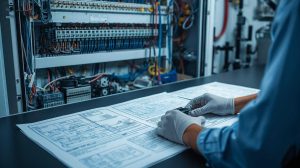
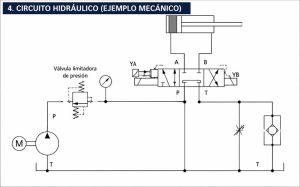
Cómo interpretar Esquemas Olehidráulicos y Neumáticos

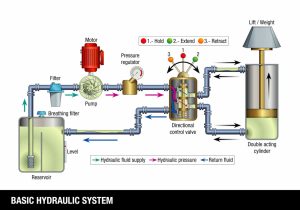
En la industria moderna —ya sea terrestre, naval u offshore— gran parte de los movimientos, fuerzas y automatismos se generan mediante sistemas oleohidráulicos y neumáticos. Cilindros, motores hidráulicos, válvulas direccionales, reguladores de presión, electroválvulas o sistemas de control eléctrico-hidráulico forman parte del día a día en maquinaria industrial, equipos portuarios, sistemas marinos y plantas de proceso.

Read more

Cómo interpretar Planos Mecánicos

La Interpretación de planos constituye una parte muy importante del conocimiento que debe poseer cualquier técnico que desee dominar el lenguaje gráfico necesario para comprender y poder trabajar en entornos donde se desenvuelven proyectos de Ingeniería

Read more

Code_Aster, free CAE software

Code_Aster es un software para el análisis de elementos finitos y simulación numérica en mecánica estructural y multifísica. Fue desarrollado por la empresa francesa Électricité de France (EDF), para el estudio y mantenimiento de plantas y redes eléctricas. Su aplicación abarca múltiples disciplinas: análisis tridimensinal mecánico y térmico principalmente, hidrodinámica, metalurgia, hidratación, secado… ya sean condiciones estacionarias o transitorias, y tanto en procesos lineales como no lineales.

Read more

Neander D-TORQUE 111 diesel outboard motor

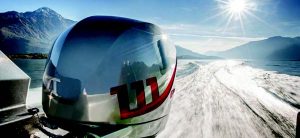
Part of the Neander DTorque range of diesel outboard motors, the DTorque 111 is a very compact model developed on an innovative 804 cc aluminium twin-cylinder block, with common rail direct injection and turbocharger supercharging, delivering 50 hp to the propeller shaft. Its name refers to its torque of 111 Nm at 2,500 rpm, a truly high value in relation to its displacement and power. The engine weighs 175 kg, which is somewhat high compared to combustion engines of equivalent power.

Read more

Pablo Mira-Oteiza

  • Qualification
    Naval and Oceanic Engineer with a degree from the Higher Polytechnic School of the University of La Coruña.

  • Experience in the sector
    He has considerable experience in the conceptual design of ships and devices and in the coordination of basic engineering projects. He has collaborated in the engineering departments of companies such as Navantia, Capgemini and Gabadi on pioneering projects for the naval industry.

  • Areas of expertise
    He is an expert in modelling ship shapes using different software programmes and has designed numerous ship hulls that have subsequently been built. His work involves performing naval architecture calculations and structural calculations using the finite element method.

Carlos Rodriguez Vidal

  • Qualification
    Naval Technical Engineer. Degree in Naval Machinery. Master's Degree in Maritime Engineering and Doctorate from the University of A Coruña. 

  • Experience in the sector
    Spanish Merchant Navy Engineer. He has extensive experience in mechanical design and structural calculations in various engineering companies and technical offices. He has taught the professional module on the organisation of propulsion plant and auxiliary machinery maintenance on ships. He is currently a professor of Naval Engineering at the University of A Coruña. 

  • Areas of expertise
    He has participated in various R&D&I research projects at the Galicia Innovation and Services Centre and the University of La Coruña. He has published several books and technical articles for both national and international scientific journals.

María Isabel Lamas Galdo

  • Qualification
    Doctor of Industrial Engineering from the University of A Coruña. 

  • Experience in the sector

    Since 2008, she has been a lecturer at the Higher Polytechnic School of the University of A Coruña, teaching Industrial Engineering and Naval Engineering courses. She has professional experience in the field of engineering projects.

  • Areas of expertise
    She is the author of several books and numerous articles in scientific journals. She has also participated as a speaker at various national and international engineering conferences.

Miguel Cerrolaza Rivas

  • Qualification
    Doctor of Industrial Engineering from the Polytechnic University of Madrid. Master's degree in Civil Engineering from the Federal University of Rio de Janeiro (Brazil).

  • Experience in the sector
    Over 30 years of experience in finite element analysis and the use of software for numerical calculation and computer modelling. He is currently a professor at the International University of Valencia (Valencia, Spain) and the Polytechnic University of Catalonia (Barcelona, Spain).

  • Areas of expertise
    Visiting professor at the Ecole Nationale des Ponts et Chaussées (Paris) and the Colorado School of Mines (USA). Author of numerous publications in journals and nearly 10 books in the field. He has been invited to give more than 40 lectures in Europe, Asia, the USA and Latin America.

Santiago Rey García

  • Qualification
    Chief Engineer in the Merchant Navy (professional qualification), Bachelor's Degree in Marine Engineering from the University of La Coruña.

  • Experience in the sector
    He has extensive experience as an engineer and chief engineer on oil tankers, chemical tankers, ro-pax vessels and deep-sea tugs. He has several years of experience in the operation and maintenance of engine rooms (both steam and diesel), predictive, preventive and corrective maintenance. He currently holds the position of Chief Engineer on deep-sea tugs.

  • Areas of expertise
    FRAMO Hydraulic Systems Operator Certificate. Advanced knowledge of computer control systems, supervision systems, and data acquisition through SCADA systems.