Code_Aster, free CAE software

Code_Aster

– FEM type: Linear & non-linear static/dynamic, thermal & fluid analysis

– Licence TypeGPL
– DeveloperElectricité de France (EDF)
– Operating system: Linux, Solaris and IRIX 64 bits

– DownloadCode_Aster

Code_Aster is a software for finite element analysis and numerical simulation in structural mechanics and multiphysics. It was developed by the French company Électricité de France (EDF), for the study and maintenance of electrical plants and networks. It was released under the GNU General Public Licence in October 2001. Most of the available documentation is in French.
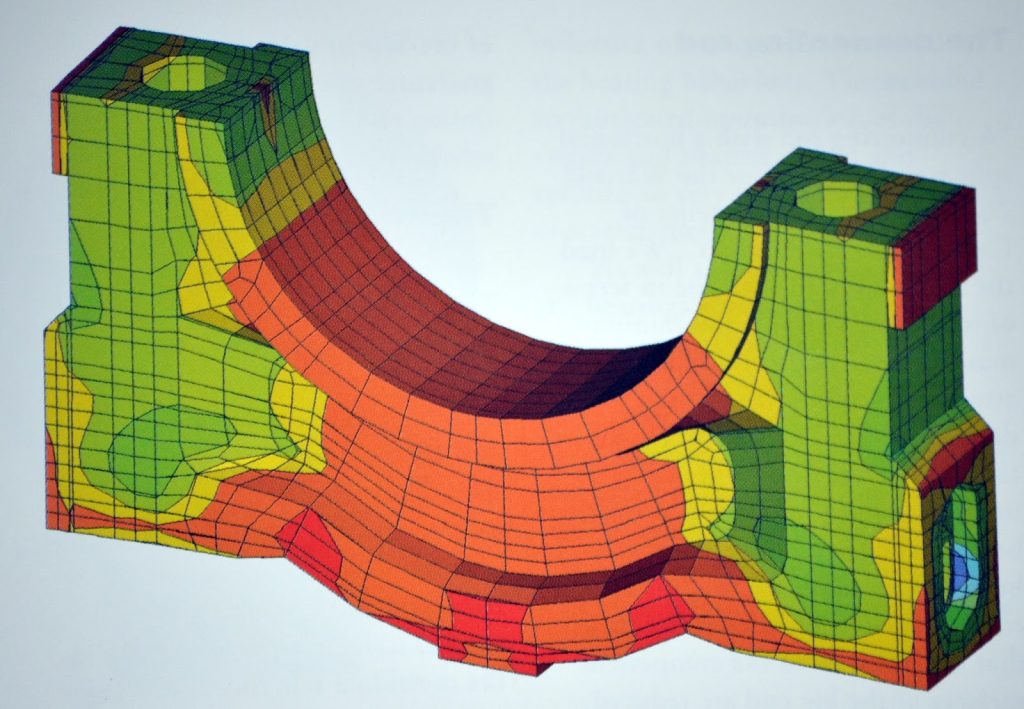
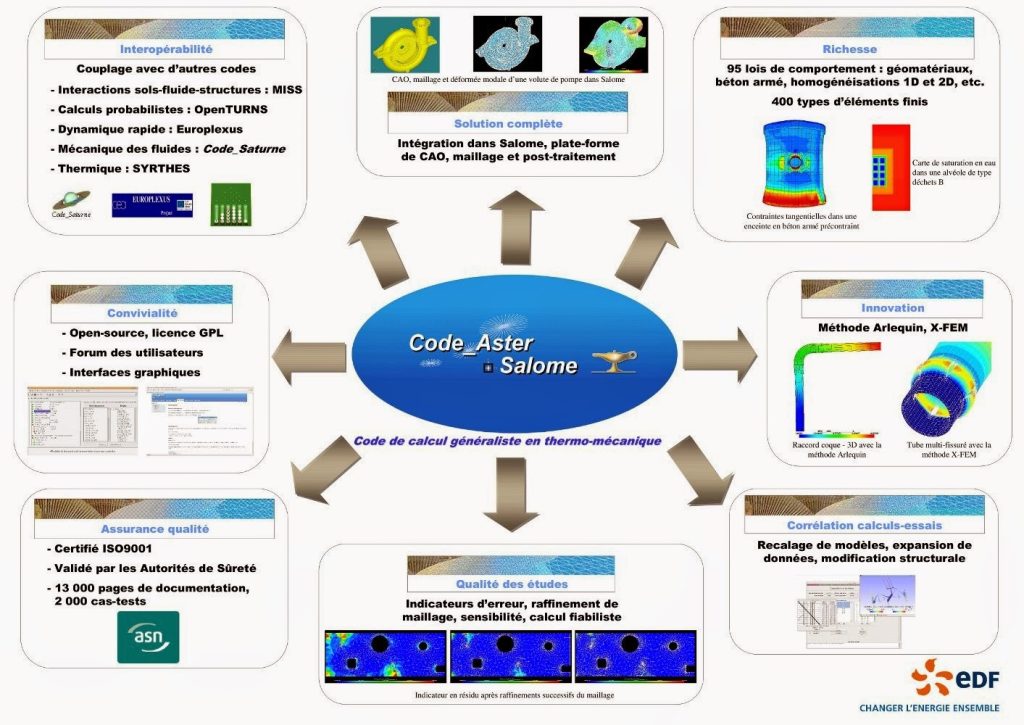
 

Code_Aster is the solver or processing engine, so it does not include pre-processing and post-processing, i.e. object meshing and presentation of study solutions.

Its application covers multiple disciplines: mainly three-dimensional mechanical and thermal analysis, hydrodynamics, metallurgy, hydration, drying... whether under steady-state or transient conditions, and in both linear and non-linear processes. It also has specific tools for fatigue, deformation, fracture, contact, geotechnics, porous materials, etc. Furthermore, the combination of these features with specific pre-processing and post-processing programmes, such as SALOME-MECA, provide you with comprehensive functionality for conducting multidisciplinary studies.
 
Code_Aster contains 1,500,000 lines of source code, mostly in Fortran and Python, and is constantly being developed, updated, and improved with new models. The quality standards required by the nuclear industry have resulted in software that achieves the highest levels of functionality and accuracy in numerical results, which have been validated through independent comparisons with analytical or experimental results, as well as the use of benchmarks against other codes. The software is provided with nearly 2,000 tests, which are dedicated to elementary qualification and are useful as examples. Code_Aster documentation includes more than 14,000 pages and covers user manuals, theory manuals that include a compilation of EDF's technical knowledge in mechanics, example problems and verification manuals. The vast majority of the documentation is still only available in French.


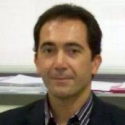
Pablo Mira-Oteiza

  • Qualification
    Naval and Oceanic Engineer with a degree from the Higher Polytechnic School of the University of La Coruña.

  • Experience in the sector
    He has considerable experience in the conceptual design of ships and devices and in the coordination of basic engineering projects. He has collaborated in the engineering departments of companies such as Navantia, Capgemini and Gabadi on pioneering projects for the naval industry.

  • Areas of expertise
    He is an expert in modelling ship shapes using different software programmes and has designed numerous ship hulls that have subsequently been built. His work involves performing naval architecture calculations and structural calculations using the finite element method.

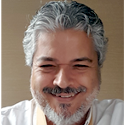
Carlos Rodriguez Vidal

  • Qualification
    Naval Technical Engineer. Degree in Naval Machinery. Master's Degree in Maritime Engineering and Doctorate from the University of A Coruña. 

  • Experience in the sector
    Spanish Merchant Navy Engineer. He has extensive experience in mechanical design and structural calculations in various engineering companies and technical offices. He has taught the professional module on the organisation of propulsion plant and auxiliary machinery maintenance on ships. He is currently a professor of Naval Engineering at the University of A Coruña. 

  • Areas of expertise
    He has participated in various R&D&I research projects at the Galicia Innovation and Services Centre and the University of La Coruña. He has published several books and technical articles for both national and international scientific journals.

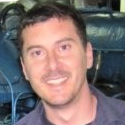
María Isabel Lamas Galdo

  • Qualification
    Doctor of Industrial Engineering from the University of A Coruña. 

  • Experience in the sector

    Since 2008, she has been a lecturer at the Higher Polytechnic School of the University of A Coruña, teaching Industrial Engineering and Naval Engineering courses. She has professional experience in the field of engineering projects.

  • Areas of expertise
    She is the author of several books and numerous articles in scientific journals. She has also participated as a speaker at various national and international engineering conferences.

Miguel Cerrolaza Rivas

  • Qualification
    Doctor of Industrial Engineering from the Polytechnic University of Madrid. Master's degree in Civil Engineering from the Federal University of Rio de Janeiro (Brazil).

  • Experience in the sector
    Over 30 years of experience in finite element analysis and the use of software for numerical calculation and computer modelling. He is currently a professor at the International University of Valencia (Valencia, Spain) and the Polytechnic University of Catalonia (Barcelona, Spain).

  • Areas of expertise
    Visiting professor at the Ecole Nationale des Ponts et Chaussées (Paris) and the Colorado School of Mines (USA). Author of numerous publications in journals and nearly 10 books in the field. He has been invited to give more than 40 lectures in Europe, Asia, the USA and Latin America.

Santiago Rey García

  • Qualification
    Chief Engineer in the Merchant Navy (professional qualification), Bachelor's Degree in Marine Engineering from the University of La Coruña.

  • Experience in the sector
    He has extensive experience as an engineer and chief engineer on oil tankers, chemical tankers, ro-pax vessels and deep-sea tugs. He has several years of experience in the operation and maintenance of engine rooms (both steam and diesel), predictive, preventive and corrective maintenance. He currently holds the position of Chief Engineer on deep-sea tugs.

  • Areas of expertise
    FRAMO Hydraulic Systems Operator Certificate. Advanced knowledge of computer control systems, supervision systems, and data acquisition through SCADA systems.