General information
Course taught by Teleformación, with 60 teaching hours to be completed in 8 weeks.
PDF manuals, video tutorials, practical exercises, an online platform available 24 hours a day, 7 days a week, with various communication resources (chat, forums, messaging, Skype, etc.), and teachers with accredited professional experience in the subject are provided. At the end of the course, the corresponding certified diploma will be issued.
| Duration: | 60 horas, online |
| Start date: | The 1st and 15th of each month (flexible) |
| Maximum time: | 8 weeks |
| Price: | 300 € |
Description
– Aimed at:
Engineers, technical engineers, engineering graduates, maintenance technicians (maintenance managers), naval industry technicians (chief engineers), offshore industry technicians, merchant navy engineering officers, naval mechanics, teachers, students, and anyone interested in learning how to diagnose faults in marine diesel engines.
– Requirements:
Basic knowledge of diesel engines is required.
Purpose:
The aim of this course is to train students to diagnose faults in marine diesel engines, based on different inspection, analysis and predictive maintenance procedures, which will indicate the condition of the machine.
Video presentation of the course:
More related information:
– INTERPRETATION OF LUBRICANT ANALYSIS IN DIESEL ENGINES (1)
– INTERPRETATION OF LUBRICANT ANALYSIS IN DIESEL ENGINES (2)
| Methodology: The course is taught online through our virtual campus, in a comfortable and flexible environment, eliminating the need for travel and the rigid schedules of face-to-face training. It also has various communication tools that allow you to stay in touch with teachers and fellow students, thus ensuring effective training with a high degree of student achievement. The assessment of the course will be carried out through theoretical and practical tests, also in online format. If you pass the course with a minimum grade of five, you will be issued with the corresponding accredited diploma. This course is taught by qualified professionals with proven professional experience and specialised training in this field. | ||
Program
CHAPTER 1: INTRODUCTION TO MARINE DIESEL ENGINES
1.1 OBJECTIVES
1.2 TYPES OF MARINE ENGINES
1.3 PROPULSION SYSTEMS
1.4 BIBLIOGRAPHY
CHAPTER 2: MAINTENANCE AND INSPECTION STRATEGIES
2.1 OBJECTIVES
2.2 MAINTENANCE ON DIESEL ENGINES
2.3 CONDITION-BASED MAINTENANCE TECHNIQUES
2.4 PREDICTIVE MAINTENANCE MONITORING
2.5 FAULT DIAGNOSIS
2.6 BIBLIOGRAPHY
CHAPTER 3: LUBRICANT ANALYSIS
1.1 OBJECTIVES
3.2 JUSTIFICATION FOR ANALYSING USED LUBRICANTS
3.3 LUBRICATION SYSTEMS IN INTERNAL COMBUSTION ENGINES
3.4 CHARACTERISTICS AND PROPERTIES OF LUBRICATING OILS
3.5 FRICTION BETWEEN MECHANICAL PARTS IN DIESEL ENGINES
3.6 MAIN CONTAMINANTS IN LUBRICANTS
3.7 LUBRICATION STUDY PROGRAMME
3.8 RULES FOR CORRECT SAMPLING
3.9 INTERPRETATION AND EVALUATION OF ANALYSIS RESULTS
3.10 BIBLIOGRAPHY
CHAPTER 4: COOLING WATER ANALYSIS
1.1 OBJECTIVES
4.2 DESCRIPCIÓN GENERAL DEL SISTEMA DE REFRIGERACIÓN
4.3 PROBLEMS CAUSED BY WATER IN THE ENGINE
4.4 CHEMICAL ANALYSIS OF COOLING WATER
4.5 CHEMICAL TREATMENT OF COOLING WATER
1.4 BIBLIOGRAPHY
CHAPTER 5: FUEL INJECTION SYSTEMS
1.1 OBJECTIVES
5.2 INTRODUCTION TO INJECTION
5.3 MECHANICAL INJECTION SYSTEMS
5.4 INJECTION PUMP DRIVE LAW
5.5 DEFICIENCIES IN THE INJECTION SYSTEM.
5.6 COMMON RAIL IN STATIONARY AND MARINE ENGINES
5.7 BIBLIOGRAPHY
CHAPTER 6: ALTERNATIVE TRAIN
5.2 INTRODUCTION
6.2 GENERAL INSPECTION OF THE ALTERNATIVE TRAIN
6.2.1 PLUNGER OR PISTON
6.2.2 CRANK ARMS AND CROSS ARMS
6.2.3 CRANKSHAFT
6.3 MEASURING CRANKSHAFT DEFLEXION
6.3.1 INSTALLATION AND ALIGNMENT
6.3.2 THE NEED FOR PUSH-UPS
6.3.3 DATA COLLECTION PROCEDURE
6.3.4 CALCULATION, DIAGRAM AND INTERPRETATION OF VALUES
6.5 BIBLIOGRAPHY
6.6 INTRODUCTION AND OBJECTIVES
6.7 EFFORTS IN CRANKSHAFTS
6.8 STRESS ANALYSIS OF A CRANKSHAFT
6.9 INSPECTION AND MONITORING OF THE CRANKSHAFT AND BEARINGS
6.10 CRANKSHAFT BREAKAGES
6.11 BIBLIOGRAPHY
CHAPTER 7: INSPECTION AND ADJUSTMENT OF VALVES
7.1 OBJECTIVES
7.2 INTRODUCTION
7.3 MARINE ENGINE CROSSHEADS
7.4 ADJUSTMENT SEQUENCE
7.5 VALVE ADJUSTMENT IN A 4-STROKE ENGINE
7.6 VALVE ADJUSTMENT IN A 4-STROKE ENGINE WITH YOKE
7.7 DATA OBTAINED AND CONCLUSIONS
7.8 BIBLIOGRAPHY
CHAPTER 8: INDICATED DIAGRAMS
8.1 OBJECTIVES
8.2 INDICATED DIAGRAMS
8.3 MECHANICAL INDICATOR
8.4 ELECTRONIC INDICATOR
8.5 INTERPRETATION OF DIAGRAMS
8.6 BIBLIOGRAPHY
Teachers
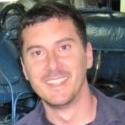
Santiago Rey García
Chief Engineer in the Merchant Navy (professional qualification), Bachelor's Degree in Naval Engineering from the University of La Coruña. He has extensive experience as an engineer and chief engineer on oil tankers, chemical tankers, ro-pax vessels and deep-sea tugs. He is certified as a FRAMO hydraulic systems operator. He has advanced knowledge of computer control systems, supervision systems and data acquisition through Scada systems. He also has years of experience in the operation and maintenance of engine rooms (both steam and diesel), predictive, preventive and corrective maintenance. He currently holds the position of Chief Engineer on deep-sea tugs.
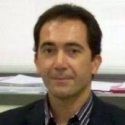
Carlos Rodriguez Vidal
Naval Technical Engineer, Bachelor's Degree in Naval Machinery, Master's Degree in Maritime Engineering and Doctorate from the University of A Coruña. Engineer Officer in the Spanish Merchant Navy. He has extensive experience in mechanical design and structural calculations in various engineering companies and technical offices. He has participated in various R&D&I research projects at the Galicia Innovation and Services Centre and the University of La Coruña. He has published several books and technical articles for both national and international scientific journals. He is currently a lecturer on the professional module on the organisation of propulsion plant and auxiliary machinery maintenance on ships. | + Ver curriculum
Enrolment information
If you are interested in the course, we would appreciate it if you could pre-register by entering your details in the Pre-registration tab, or contact us and we will answer any questions or queries you may have about this course.
Our contact details:
Contact number: +34604859663
• E-mail: info@technicalcourses.net