


Flexible start. The full access and tutoring period will start from the date you join.
Access to the learning platform, videos, and tutor support during this period.
Interested in the course but not ready to enroll yet?
Payment methods: card, bank transfer, and PayPal.
Secure card payment

By the end of the course, you will be able to apply this knowledge in real professional situations.
Training designed for professionals who need to interpret electrical documentation with greater confidence and autonomy.
Everything you need to complete the course, including tutor support, learning materials, and final certification.
Skills applicable across different roles, departments, and industrial environments.
SALOME allows modeling, modifying, importing and exporting geometries; generating and editing meshes; controlling their quality and visualizing results of CFD and numerical simulations.
Check whether you need prior knowledge or experience before starting the course.
No prior knowledge of Salome-Meca is required. It is advisable to have general notions of technical design, engineering, or numerical simulation to make the most of the modeling, meshing, and post-processing content.
Important: The course manuals, videos, tutorials, exercises, and other didactic material are entirely in English.

Master in Civil Engineering from the Federal University of Rio de Janeiro and Doctor of Industrial Engineering from the Polytechnic University of Madrid. He has over 30 years of experience in finite element analysis, numerical calculation, and computer modeling. He is the author of numerous scientific publications and nearly ten specialized books, and has given more than forty conferences in Europe, Asia, the United States, and Latin America. He currently teaches at universities in Spain.
Training delivered by a professional with real industry experience.
A flexible, practical methodology compatible with professional activity.
Access the learning platform whenever you want and organize your study according to your availability.
Video lessons, technical documentation, exercises, and applied activities.
You will be able to ask questions and receive guidance from the instructor during the training period.
Complete the activities and assessments to obtain the certificate of completion.
Practical information about access, materials, tutoring, and enrollment.
No. The course is online and asynchronous. You can access the learning platform and progress according to your availability during the course period. At any time: 24/7.
The start is flexible. After completing enrollment and confirming payment, you will receive instructions to access the learning platform.
The course is planned to be completed over eight weeks. During that period, you will have access to the learning platform, the content, and tutor support.
Yes. The technical PDF manuals can be downloaded, and you will be able to keep them as reference material once the course is finished.
Yes. During the training period, you can submit questions and receive guidance from the tutor through the channels available on the learning platform.
Yes. Once you complete the planned activities and assessments, the corresponding certificate of completion will be issued.
Companies that meet the requirements can subsidize all or part of the cost using their FUNDAE credits. Technical Courses provides the necessary information and can put the company in contact with a specialized provider to manage the process.
Yes. Card payment via Stripe is the fastest option, but you can also request payment by bank transfer or PayPal. For companies, multiple students, or invoicing needs, use the “Request information” button.
Once payment is confirmed, Technical Courses will process your enrollment and email you the instructions and access credentials for the learning platform.
Access the course, progress at your own pace, and benefit from the support of an expert tutor throughout the entire training period.
Not ready to enroll yet?
Provide the necessary information to identify the payment and prepare your enrollment.
Complete your billing details and we will send you a proforma invoice before payment.
Make the transfer using the details below. Your enrollment will be activated once the payment has been confirmed.
Course: Course name
Beneficiary: Norplan Engineering S.L.
Bank: ABANCA
IBAN: ES21 2080 0238 2030 4002 6565
Reference: First and last name + course name
Amount to transfer:
Please include the transfer reference so we can identify the payment and activate your enrollment without delay.
Do you need a pro forma invoice before making the transfer?
You can pay online immediately or via bank transfer.
Credit card, Bizum, Apple Pay, Google Pay, and other available methods.
Transfer the funds to our ABANCA account.
Does your company require a pro forma invoice before payment?
Déjanos tu consulta y te responderemos personalmente.
You can pay online immediately or via bank transfer.
Credit card, Bizum, Apple Pay, Google Pay, and other available methods.
Transfer the funds to our ABANCA account.
Does your company require a pro forma invoice before payment?
Complete your billing details and we will send you a proforma invoice before payment.
Provide the necessary information to identify the payment and prepare your enrollment.

Titulación
Ingeniero Naval y Oceánico titulado en la Escuela Politécnica Superior de la Universidad de La Coruña.
Experiencia en el sector
Cuenta con una notable experiencia en el diseño conceptual de buques y artefactos y en la coordinación de proyectos de ingeniería básica. Ha colaborado en los departamentos de ingeniería de compañías tales como Navantia, Capgemini o Gabadi, en proyectos pioneros para la industria naval.
Especialidades
Domina el modelado de formas de buques en diferentes softwares y ha creado numerosos cascos de buques posteriormente construidos. En sus trabajos realiza cálculos de arquitectura naval así como cálculos estructurales mediante el método de los elementos finitos.
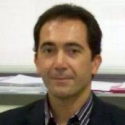
Titulación
Ingeniero Técnico Naval. Licenciado en Máquinas Navales. Máster en Ingeniería Marítima y Doctor por la Universidade da Coruña.
Experiencia en el sector
Oficial de Máquinas de la Marina Mercante Española. Cuenta con extensa experiencia en diseño mecánico y cálculo de estructuras en diferentes empresas de ingeniería y oficinas tecnicas. Ha sido profesor del módulo profesional de Organización del mantenimiento de planta propulsora y maquinaria auxiliar de buques. Actualmente es profesor de Ingeniería Naval en la Universidade da Coruña.
Especialidades
Ha participado en diversos proyectos de investigación I+D+i en el Centro de Innovación y Servicios de Galicia y en la Universidad de La Coruña. Publicó diversos libros y artículos técnicos para revistas científicas tanto nacionales como internacionales.

Titulación
Doctora Ingeniera Industrial por la Universidade da Coruña.
Experiencia en el sector
Desde el año 2008 hasta la actualidad ejerce como profesora en la Escuela Politécnica Superior de la Universidade da Coruña, impartiendo docencia en las carreras de Ingeniería Industrial e Ingeniería Naval. Cuenta con experiencia profesional en el campo de proyectos de ingeniería.
Especialidades
Es autora de varios libros y numerosos artículos en revistas científicas. Asimismo, ha participado como ponente en diversos congresos de ingeniería, tanto nacionales como internacionales.

Titulación
Doctor Ingeniero Industrial por la Universidad Politécnica de Madrid. Máster en Ingeniería Civil por la Universidade Federal de Río de Janeiro (Brasil).
Experiencia en el sector
Más de 30 años de experiencia en análisis por elementos finitos y uso de software para cálculo numérico y modelización por ordenador. Actualmente es profesor en la Universidad Internacional de Valencia (Valencia, España) y en la Universidad Politécnica de Cataluña (Barcelona, España).
Especialidades
Profesor invitado por la Ecole Nationale des Ponts et Chaussess (París) y por la Colorado School of Mines (USA). Autor de numerosas publicaciones en revistas y cerca de 10 libros en el área. Ha sido invitado a dictar más de 40 conferencias en Europa, Asia, USA y Latinoamérica.
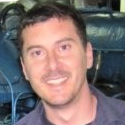
Titulación
Jefe de Máquinas de la Marina Mercante (titulación profesional), Licenciado en Máquinas Navales por la Universidad de La Coruña.
Experiencia en el sector
Cuenta con extensa experiencia como oficial de máquinas y jefe de máquinas en buques petroleros, quimiqueros, Ropax y remolcadores de altura. Varios años de experiencia en la conducción y mantenimiento de salas de máquinas (tanto con vapor como diesel), mantenimiento predictivo, preventivo y correctivo. Actualmente desempeña el cargo de Jefe de Máquinas en remolcadores de altura.
Especialidades
Certificado de Operador de sistemas hidraulicos FRAMO. Conocimientos avanzados de sistemas de control por computadora, sistemas de supervisión y adquisición de datos por medio de sistemas Scada.
Make the transfer using the details below. Your enrollment will be activated once the payment has been confirmed.
Course: Course name
Beneficiary: Norplan Engineering S.L.
Bank: ABANCA
IBAN: ES21 2080 0238 2030 4002 6565
Reference: First and last name + course name
Amount to transfer:
Please include the transfer reference so we can identify the payment and activate your enrollment without delay.
Do you need a pro forma invoice before making the transfer?