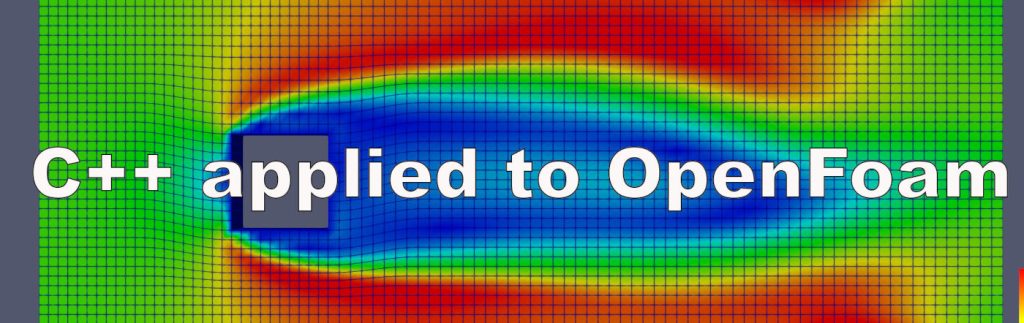
General information
El curso C++ aplicado a OpenFOAM incluye manuales en pdf y ejercicios. Se estima que el alumno debe dedicar como mínimo 25 horas para superar el curso. El tiempo máximo para realizar el curso es de dos meses. Los alumnos que superen el curso recibirán un diploma.
Todo el material (videos, ejercicios y textos) está disponible desde el primer día y no hay horario, sino que cada alumno estudia a su ritmo. Nuestra plataforma online dispone de diversos recursos tecnológicos tales como chat, foros, mensajería, videoconferencia, etc. Los profesores (M.I. Lamas y C.G. Rodríguez) cuentan con experiencia profesional y docente acreditada en CFD y OpenFOAM. Además, escriben continuamente artículos técnicos en conocidas revistas a nivel internacional. El material del curso está íntegramente en inglés; sin embargo, las consultas con los profesores pueden realizarse en idioma inglés o en español.
| Duration: | 25 horas. Online |
| Start date: | The 1st and 15th of each month (flexible) |
| Tiempo máximo: | 2 meses |
| Price: | 250€ |
Description
Aimed at:
A toda aquella persona interesada en el desarrollo de C++ para el manejo de OpenFOAM. Los alumnos que no tengan ninguna experiencia en C++ recibirán material adicional para adquirir un nivel elemental y con ello poder seguir el curso.
Objectives:
El objeto de este curso es adquirir los conocimientos y habilidades prácticas necesarios para entender los solvers de OpenFOAM y modificarlos con el fin de adaptarlos a sus necesidades.
Descripción general del software libre OpenFOAM:
OpenFOAM (Open Field Operation and Manipulation) es un software de CFD (Mecánica de Fluidos Computacional) gratuito y de código abierto. Tiene un gran número de usuarios en la mayoría de áreas de la ingeniería y de la ciencia, tanto en organizaciones comerciales como académicas.
Este curso ha sido enteramente desarrollado por Technical Courses, siendo no ofertado por OpenCFD Limited, el productor del software OpenFOAM y propietario de las marcas OPENFOAM® y OpenCFD®.
Program
| Chapter 1: Introduction to C++. Application to OpenFOAM (Introduction to a C++. Application to OpenFOAM) 1.1 Introduction (introducción) 1.2 C++ 1.3 Basic structure of a C++ program (estructura básica de un programa C++) 1.4 Preprocessor directives (directivas de preprocesador) 1.5 Variables (variables) 1.6 Operators (operadores) 1.7 Inputs and outputs (entradas y salidas) 1.8 Control structures (estructuras de control) Chapter 2: C++. Application to OpenFOAM (C++. Aplicación a OpenFOAM) 2.1 Introduction (introducción) 2.2 Typedefs 2.3 Functions (funciones) 2.4 Pointers (punteros) 2.5 Data structures (estructuras de datos) 2.6 Classes (clases) 2.7 Constructors (constructores) 2.8 Destructors (destructores) 2.9 Friends (amigos) 2.10 Inheritance (herencia) 2.11 Virtual member functions (funciones miembro) 2.12 Abstract classes (clases abstractas) 2.13 Templates (plantillas) 2.14 Namespaces (espacios de nombres) 2.15 Solving partial differential equations in OpenFOAM (Resolución de ecuaciones en derivadas parciales en OpenFOAM) 2.16 Programation in OpenFOAM (programación en OpenFOAM) Chapter 3: Development of own code in OpenFOAM (desarrollo de código propio en OpenFOAM) 3.1 Development of a new solver (desarrollo de un solver propio) 3.2 Compilation of applications and libraries (compilación de aplicaciones y librerías) 3.3 Development of a new boundary condition (desarrollo de una nueva condición de contorno) 3.4 Development of a new turbulence model (desarrollo de un nuevo modelo de turbulencia) 3.5 Development of a new transport model (desarrollo de un nuevo modelo de transporte) 3.6 Development of a new thermophysical model (desarrollo de un nuevo modelo termofísico) 3.7 Development of a new postprocessing utility (desarrollo de una nueva utilidad de postprocesado) EXERCISES (EJERCICIOS) 1 C++ program 1 2 C++ program 2 3 C++ program 3 4 C++ program 4 5 C++ program 5 IMPORTANTE: En este curso se seguirá el programa indicado y los alumnos podrán realizar cuantas preguntas necesiten siempre que éstas estén relacionadas con el curso. Para aquellas personas que lo que necesiten sea programar un tema concreto en lugar de hacer un curso se recomienda que consulten nuestros servicios de Soporte Técnico de OpenFOAM y CFD en general. |
Teachers

Mª Isabel Lamas Galdo
Doctora Ingeniera Industrial por la Universidade da Coruña. Cuenta con experiencia profesional en el campo de proyectos de ingeniería. Además, desde el año 2008 hasta la actualidad ejerce como profesora en la Escuela Politécnica Superior de la Universidade da Coruña. Imparte docencia en las carreras de Ingeniería Industrial e Ingeniería Naval. Es autora de varios libros y numerosos artículos en revistas científicas. Asimismo, ha participado como ponente en diversos congresos de ingeniería, tanto nacionales como internacionales. | + Ver curriculum
Enrolment information
If you are interested in the course, we would appreciate it if you could pre-register by entering your details in the ‘Pre-registration’ tab, or contact us and we will answer any questions or queries you may have about this course.
Our contact details:
Contact number: +34604859663
• E-mail: info@technicalcourses.net